
General contractor disputes
Your contractor stopped showing up and your house is still open.
Tell us what was left unfinished and we'll take it from here.
What is still open on a home renovation?
10 ways to put pressure on the other side, and they do not all close at the same time. Tell us roughly when this started.
See which ones apply to you- Chargeback4 mo
- Financing unwind12 mo
- Manufacturer certification24 mo
- Insurance channel12 mo
- Surety bond24 mo
- Licensing board48 mo
- Small claims48 mo
- File a lawsuit48 mo
- Recovery fund24 mo
- Public recordno deadline
What does it cost to sort out a home renovation?
Most of what follows you can do yourself, and the parts that cost nothing are first for a reason.
Start free, today
A demand letter you can fill in, and a plain guide to small claims where you live. No account, no cost.
Finding out costs nothing
Tell us what happened and hear where you stand. If we do not think we can move the business, we say so.
One cost, paid once
Asked for after we have reviewed your file and shown you the figure, and before any work starts. Nothing after it.
We take no share
No percentage of what you get back. A recovery is paid to you by the business, and never passes through us.
The routes that bite hardest in general contractor.
Chargeback
A deposit or a progress payment made by card for work never done is the fastest route here, and the first to close. Most renovation deposits are paid this way.
Surety bond
General contracting is licensed in most states and a license usually carries a bond. On an abandoned job the bond is frequently the only funded party left.
Licensing board
A state contractor board can review a license over abandonment, unpermitted work, or work that failed inspection. All three are complaints boards routinely accept.
Public record
This trade lives and dies on local reputation, which makes the public record bite harder here than almost anywhere else. It also never closes.
Where a home renovation actually goes wrong.
The contract and its scope
Renovation contracts are frequently a page long, sometimes an emailed estimate. Scope, allowances, timeline and what happens if the job stops are the clauses most often missing.
A thin contract is not the disaster it feels like. Where a contract is silent, default consumer protections and the ordinary meaning of what was promised fill the gap.
Change orders that were never approved
Extras appear on a final invoice that were never agreed in writing, or were agreed verbally and then priced differently. Most states require a written, signed change order.
The requirement is usually on the contractor, not on you. An unsigned change order is often unenforceable rather than merely disputed.
The permit, if one was pulled
Structural, electrical and plumbing work needs a permit. Contractors skip it to move faster, or ask the homeowner to pull it themselves so the liability sits with you.
If you were asked to pull the permit for work you were not doing, that is worth knowing about now. Either way the permit file is a record the contractor does not control.
Failed inspections
Where a permit exists, a failed inspection is a third party writing down exactly what is wrong with the work, at the time, for free.
This is the strongest single document in most renovation disputes, and most homeowners never think to ask for the inspection history.
What is behind the drywall
Framing, insulation, wiring and plumbing all get covered. Skipped or downgraded work here is invisible on the finished job and fully invoiced.
Progress photographs are usually the only evidence, which is why the ones on your phone from during the build matter more than the ones from after.
Subcontractors and lien notices
A general contractor who stops paying subs leaves you receiving preliminary lien notices for money you already paid the general. It is a common early warning.
A lien notice is dated, formal, and names an amount. It is evidence about the contractor's solvency that arrived at your address unprompted.
The three we see most.
All of it, on a home renovationA project abandoned mid-build
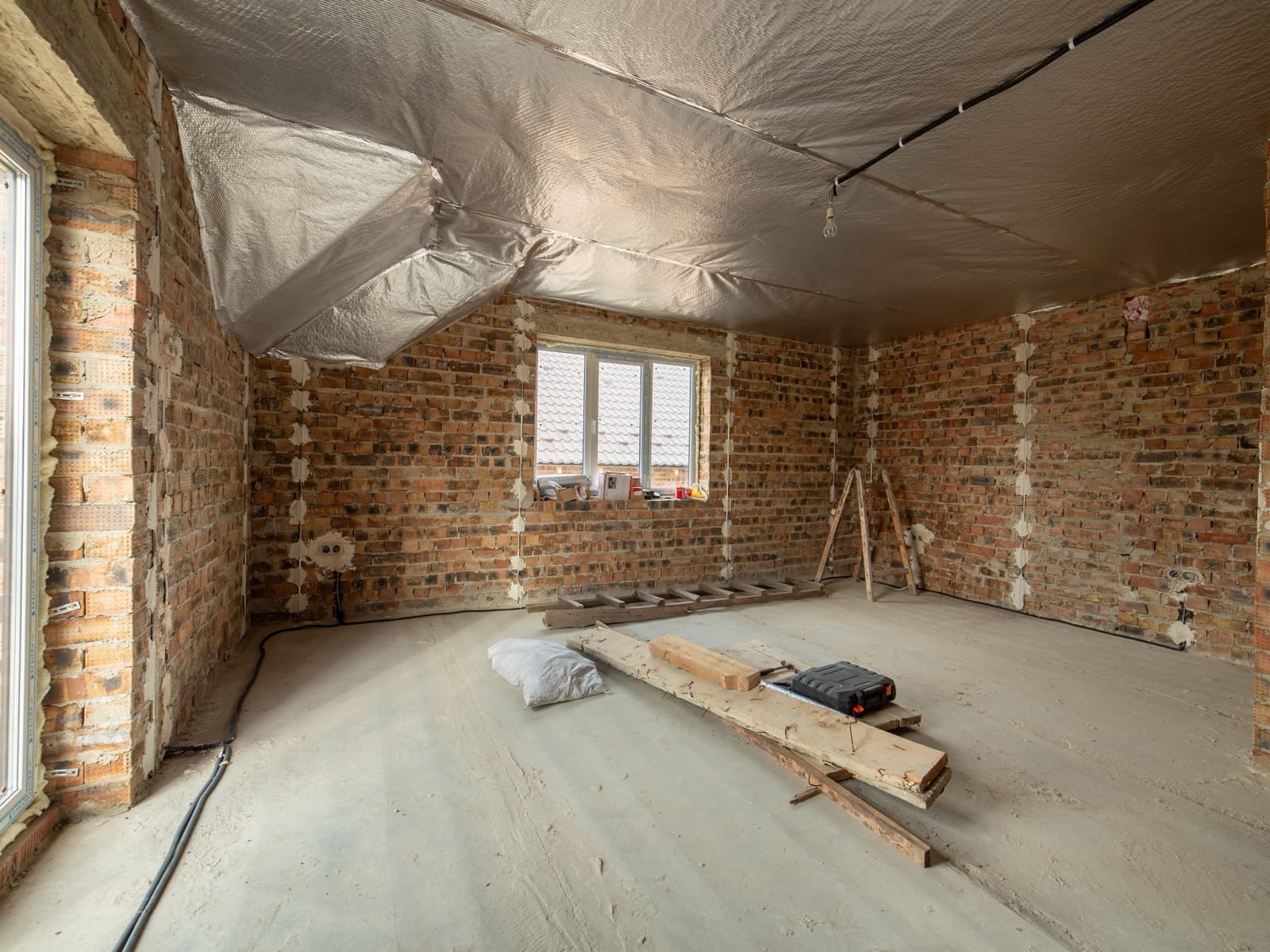
Deposit spent, work partly done, and a contractor who stops responding. Every additional trade that has to work around unfinished work costs more than it would have originally.
Change orders that were never approved
Extras appearing on a final invoice that were never agreed in writing, or agreed verbally and then priced differently.
Work that fails inspection
Where a permit was required, a failed inspection is documentation of the problem. Where a permit was never pulled at all, that's frequently its own issue.
What happens if you start today.
The same day
You send us the contract or the estimate, what you have paid, and any photographs from during the build. Text threads are often the most useful thing you have.
Before we ask you for anything
We pull the permit and inspection history, check the license and bond, and look for other complaints and any lien filings.
Then you get a straight answer
What is provable, which routes are open to you, and which one we would use first. Including when we do not think it is worth pursuing.
After that it is ours
The demands, the bond claim, the board complaint and the chasing, with the file kept up to date.
We'll have general contractor already selected.
Questions people ask us first.
There was barely a contract. Am I out of luck?
No, and it is a more common situation than a proper one. Emails, texts, an estimate and what was actually paid establish a great deal, and where a contract is silent consumer protections do not go away.
The contractor has gone out of business. Is that the end of it?
Frequently not. A license bond, a state recovery fund and the licensing board all survive a company closing, and none of them requires the contractor to co-operate.
Extras appeared on my final bill that I never agreed to. Do I have to pay them?
Most states require change orders to be in writing and signed. An unsigned extra is often unenforceable rather than merely arguable, which is a stronger position than most people assume.
The work failed inspection and they will not come back. What then?
A failed inspection is documentation of the defect written by somebody with no stake in it. It is usually the most useful thing in the file.
I am getting lien notices for money I already paid. Is that my problem?
It becomes a problem worth acting on quickly, and it is also information: it tells you the contractor is not paying their subs, which changes which routes are worth using first.
Are you a law firm?
No. We are a consumer advocacy service. We prepare and pursue your advocacy file and correspond with the business on your behalf. We do not represent you in court, and if your situation needs an attorney we tell you and hand off the materials.
Disclosures
- Satisfy is not a law firm and is not a licensed insurance adjuster or public adjuster. We prepare and pursue your file and correspond with the business on your behalf; a court filing or an insurance claim is made by you, or by an independent professional you engage, using the materials we assemble. We do not represent you in litigation, arbitration, or an insurance claim.
- The windows shown on this page are illustrative for the kind of dispute selected, measured from the work rather than from the dispute. They are an estimate and not a legal opinion. Yours depend on your contract, your policy, your card issuer's rules and your state's law, and some will already have closed. We do not guarantee that any route is still open to you.
- What goes wrong with a home renovation is described here in general terms. It is not an assessment of your own job and it is not technical advice about whether any particular work was done correctly.